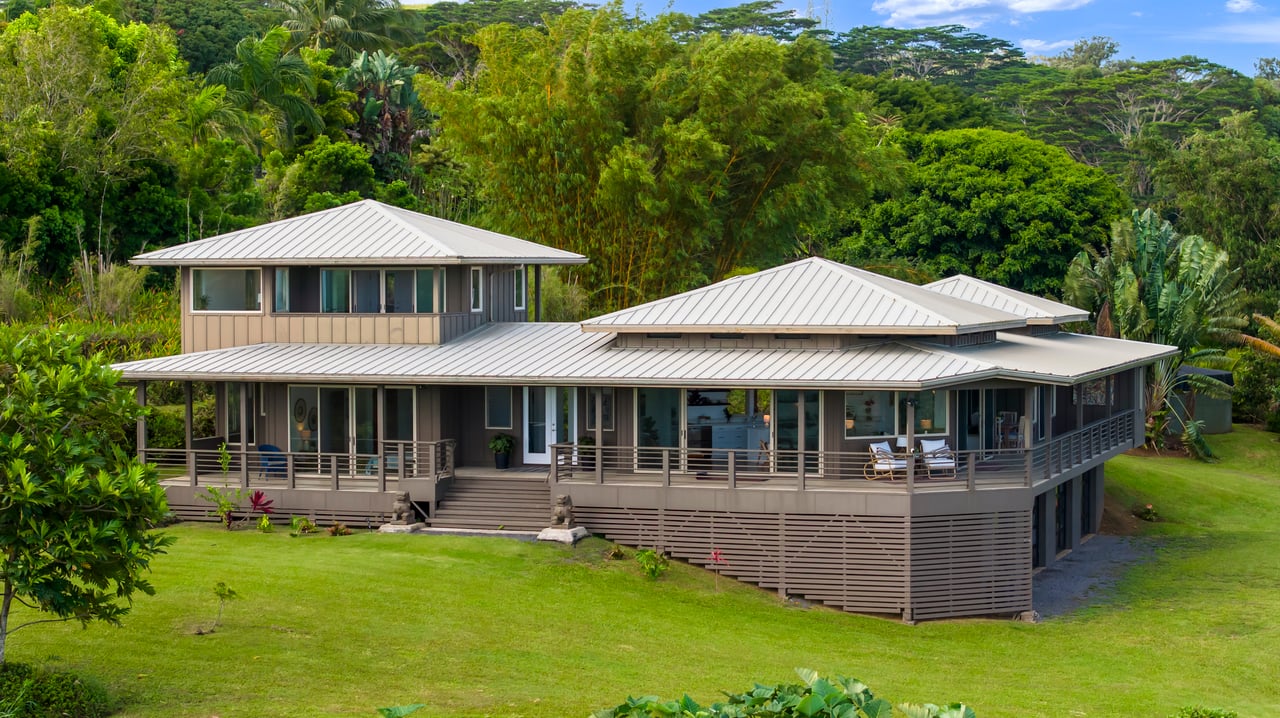
A local guide to catchment water and county water for buyers considering homes in Kula, Makawao, Olinda, Haʻikū, and other rural areas of Maui.
Mino McLean July 14, 2026
Mino McLean July 14, 2026
If you're looking at homes in Kula, Olinda, Haʻikū, or other rural parts of Upcountry and Maui's North Shore, there's a good chance you'll come across a property that relies on catchment water instead of county water. For buyers who have never lived with a catchment system, it can sound intimidating at first. In reality, it's simply part of life for many homeowners in these areas.
One of the first questions I hear is, "Is catchment water a bad thing?" The short answer is no. Like many aspects of living in Upcountry or Haʻikū, it's just different. Understanding how it works and what to look for can help you feel much more confident when considering a home.
A catchment system collects rainwater from the roof of the home. That water is directed into a storage tank, filtered, and often treated before it's used throughout the property.
Because many rural areas of Maui aren't connected to the County of Maui water system, catchment has been a reliable solution for decades. You'll find homes with catchment systems throughout Kula, Olinda, Haʻikū, and other rural communities across the island.
Neither system is automatically better. They simply come with different responsibilities.
A home on county water typically has a monthly water bill, while a catchment system requires regular maintenance by the homeowner. That maintenance may include cleaning filters, monitoring the water level, servicing the UV filtration system if one is installed, and occasionally cleaning the tank.
Many longtime residents in Kula, Olinda, and Haʻikū appreciate the independence that comes with a well-maintained catchment system. Others prefer the convenience of county water. It often comes down to personal preference and lifestyle.
When viewing a property with catchment water, I always recommend asking a few additional questions:
These aren't necessarily red flags. They're simply part of understanding how the property operates, just as you would ask about a septic system, solar equipment, or any other major feature of a rural property.
Generally, no. Many homes with catchment systems are financed successfully every year. Lenders are typically more concerned with the overall condition of the home than whether the water source is county water or catchment. That said, every loan program has its own requirements, so it's always a good idea to discuss the property with your lender early in the process.
My sense is that the resale market generally prefers grid tied water systems.
In many parts of Upcountry and Haʻikū, catchment water is expected. Buyers searching in these areas often understand it's simply part of owning a rural property. A well-maintained catchment system usually doesn't deter buyers, especially when the home has been cared for and the system is functioning properly.
Location, condition, views, acreage, and overall property appeal tend to have a much greater impact on value than the water source alone.
One of the things that makes Upcountry Maui and Haʻikū so special is that no two properties are exactly alike. Homes can have different elevations, weather patterns, water sources, and infrastructure, even on the same road.
For many longtime residents, catchment water is simply part of everyday life. A well-maintained system can provide a reliable water source for years, and many homeowners wouldn't think twice about it.
If you're considering buying in Kula, Makawao, Olinda, Haʻikū, or another rural Maui community, the most important thing isn't whether a home has catchment or county water. It's understanding how the system works, how it's been maintained, and whether it fits your lifestyle.
The more you understand about a property before making an offer, the more confident you'll feel throughout the buying process. Like agricultural zoning, septic systems, and rural road access, a home's water source is just one piece of the bigger picture that makes living in rural Maui so unique.
Stay up to date on the latest real estate trends.
September 3, 2026
August 28, 2026
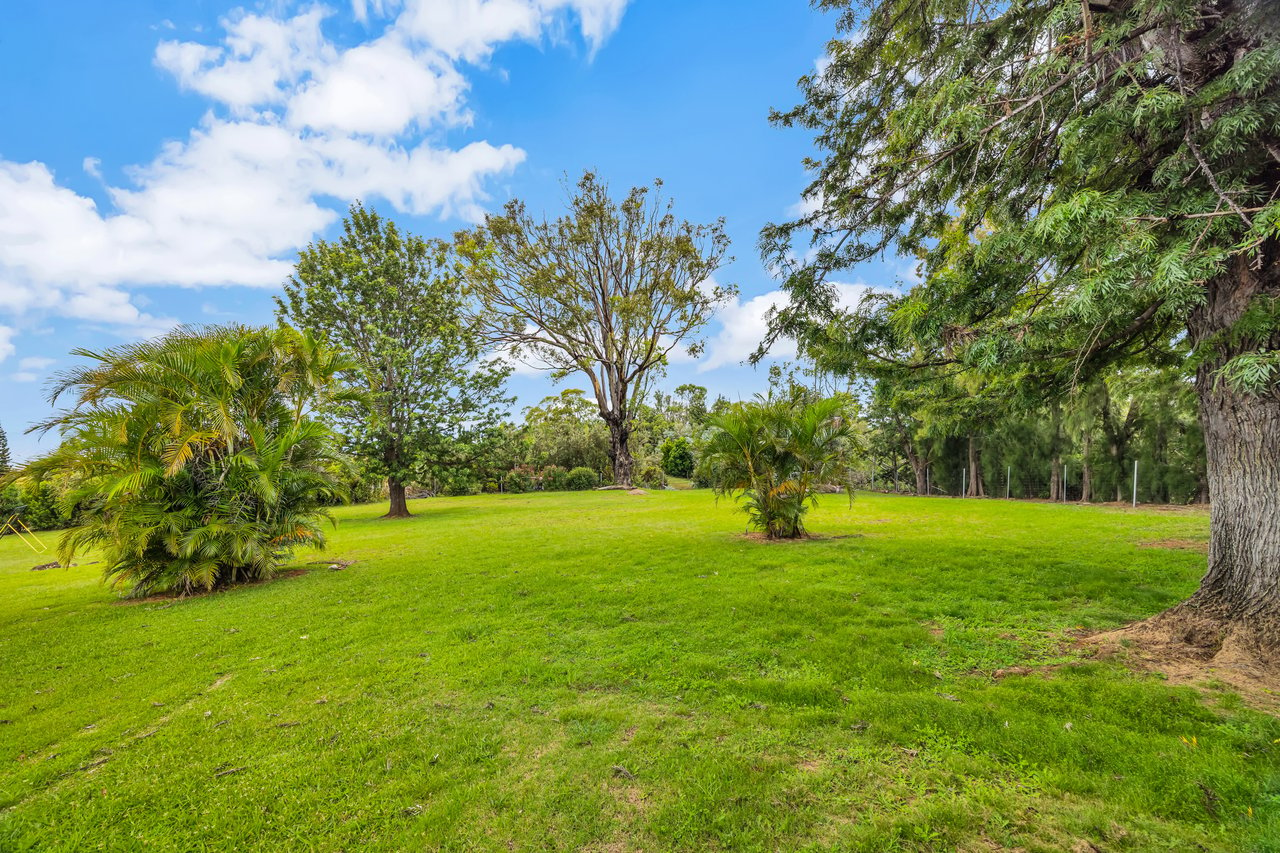
Agricultural land
August 20, 2026
What agricultural zoning actually permits on Maui's ag-zoned parcels, from farm dwellings to septic capacity.
Right Sizing
August 14, 2026
Architecture
July 30, 2026
Haʻikū luxury home for sale
July 21, 2026
Nuka Haiku Restaurant

July 18, 2026
Buying a home in Upcountry or rural Maui? Here's how Hawaii's 2050 cesspool law works, what conversion costs, and how to inspect before you buy.
July 14, 2026
What you need to know when considering catchment
July 9, 2026
Mino empowers buyers and sellers to make impactful, meaningful, informed decisions that enrich their lives for the better. Approaches each client with integrity and a sense of honesty that’s born from working in a place she’s always called home.