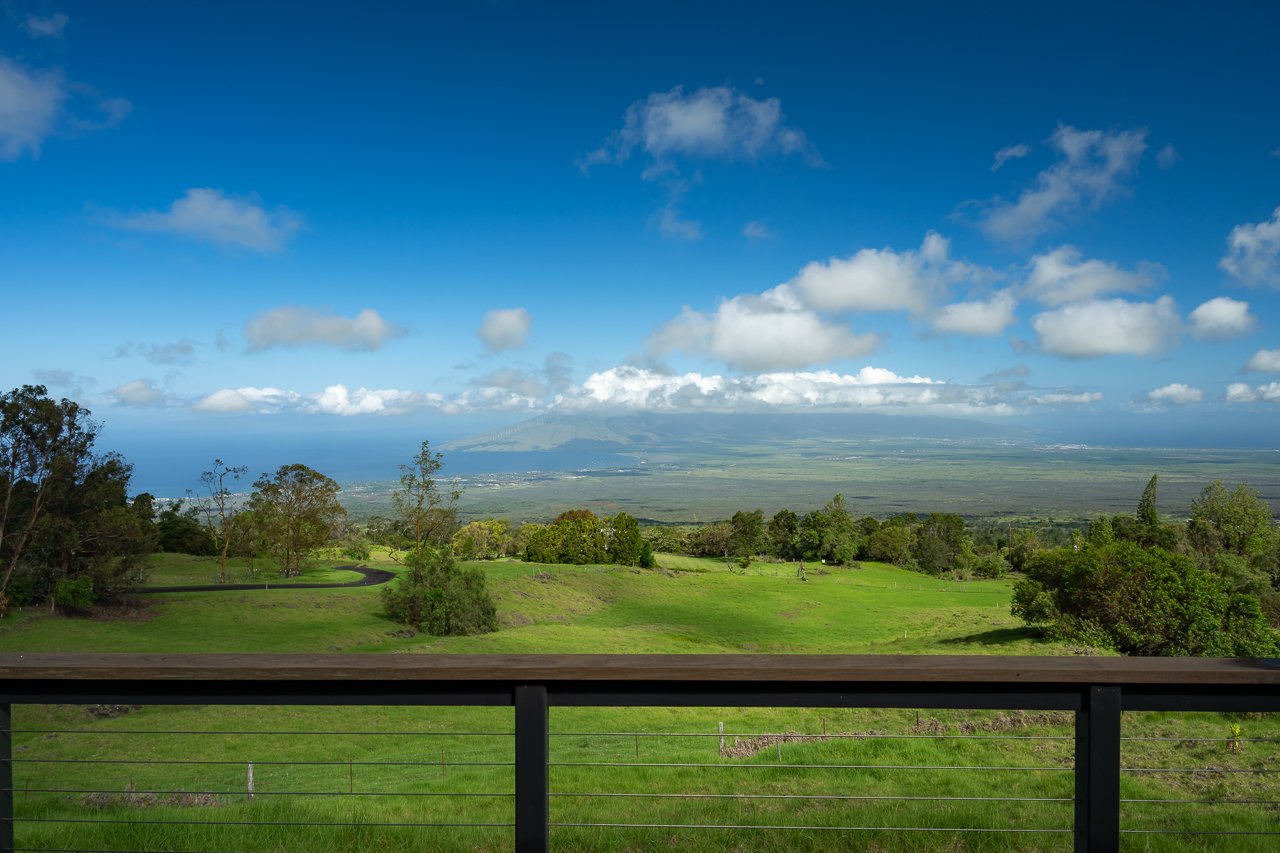
Right-Sizing Upcountry Maui: Aging in Place Before the Driveway Decides for You
Right Sizing Mino McLean August 14, 2026
Right Sizing Mino McLean August 14, 2026
There is a particular kind of Upcountry driveway I think about often: a quarter mile of gravel switching back through eucalyptus, steep enough that it collects runoff every winter, long enough that a delivery truck won't attempt it twice. It was built for someone who could walk it without thinking. Twenty or thirty years later, that same driveway is often the thing standing between a homeowner and their own front door.
I've sat in enough kitchens in Upper Olinda, Pi'iholo, and deep in Haʻikū to know this scenario by heart. The house is paid off. The pasture below the house hasn't been mowed in a season because the person who used to do it retired, or moved, or the equipment broke and nobody's replaced it. Everyone in the family agrees, quietly, that something should change — usually after a fall, a hospital stay, or a Kona storm that knocked out power for four days and made the drive down from Olinda, Pi'iholo, or deep Haʻikū to Maui Memorial in Wailuku feel like a much longer trip than it used to.
That's the moment most people start thinking seriously about moving. It's also, in almost every case, the worst possible moment to start.
Right-sizing, done early, is a choice. Done late, it's triage.
The real estate industry has a term for this — right-sizing, as distinct from downsizing. Downsizing implies loss: less space, less house, a step down. Right-sizing is closer to what's actually happening for most of my Upcountry clients: not less house, but a better-matched house — one without the maintenance burden of five acres of pasture, the deferred repairs on a thirty-year-old roof, or a layout that assumes stairs are no obstacle. For a lot of families, right-sizing isn't even about leaving the land at all. It's about adding a single-level guest cottage or caregiver suite on the same property, so a parent can stay close to family without staying in a house that no longer fits their life.
What that looks like, specifically, in this market:
None of this is really about age. It's about matching a home to the life someone actually wants to live for the next decade, rather than the one they built thirty years ago for a different family and a different set of knees.
The families I've worked with who did this early — while the homeowner was still the one making the decision, not a health event or their adult kids — consistently ended up in better situations than the ones who waited. They chose their next home instead of settling for whatever was available during a crisis. They sorted through decades of belongings on their own timeline instead of leaving that work to their children during a far harder week. And in more than one case, they used the equity from an oversized, high-maintenance property to buy something smaller and build guest quarters for the caregiver or family member they knew they'd eventually need nearby.
Waiting doesn't avoid the decision. It just hands it to someone else, later, under worse circumstances.
For some, the right-sized home isn't another parcel Upcountry at all — it's a condo. Fewer stairs, no yard, no septic system, no driveway to maintain, and often a lock-and-leave simplicity that fits this stage of life well. If that's the direction you've been weighing, the timing happens to favor you: condo inventory across Maui is the highest it's been in several years, prices have softened from their 2021–2023 highs, and properties are sitting longer, which means more room to negotiate than buyers have seen in a long time. It's a genuinely different market than the one you may remember from a few years ago — one where taking your time and choosing carefully is realistic again.
If you're Upcountry and starting to think about what the next chapter of your property looks like — whether that means reconfiguring what you have, adding a caregiver suite, or moving to something that fits better — I'd welcome the conversation. This is a different kind of transaction than a typical sale, and it helps to work with someone who knows both the Upcountry market and what these moves actually require.
Stay up to date on the latest real estate trends.

October 7, 2026
October 1, 2026
September 10, 2026
August 28, 2026
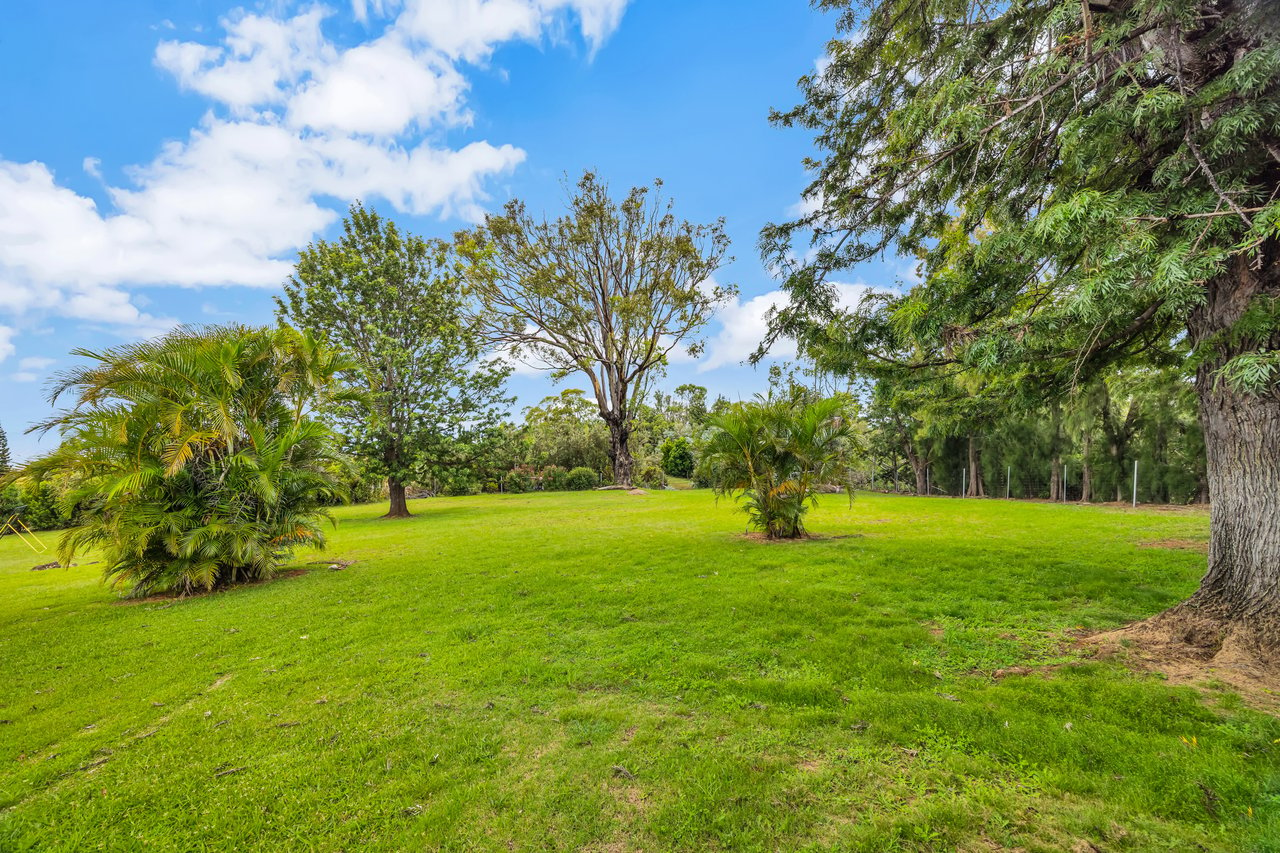
Agricultural land
August 20, 2026
What agricultural zoning actually permits on Maui's ag-zoned parcels, from farm dwellings to septic capacity.
Right Sizing
August 14, 2026
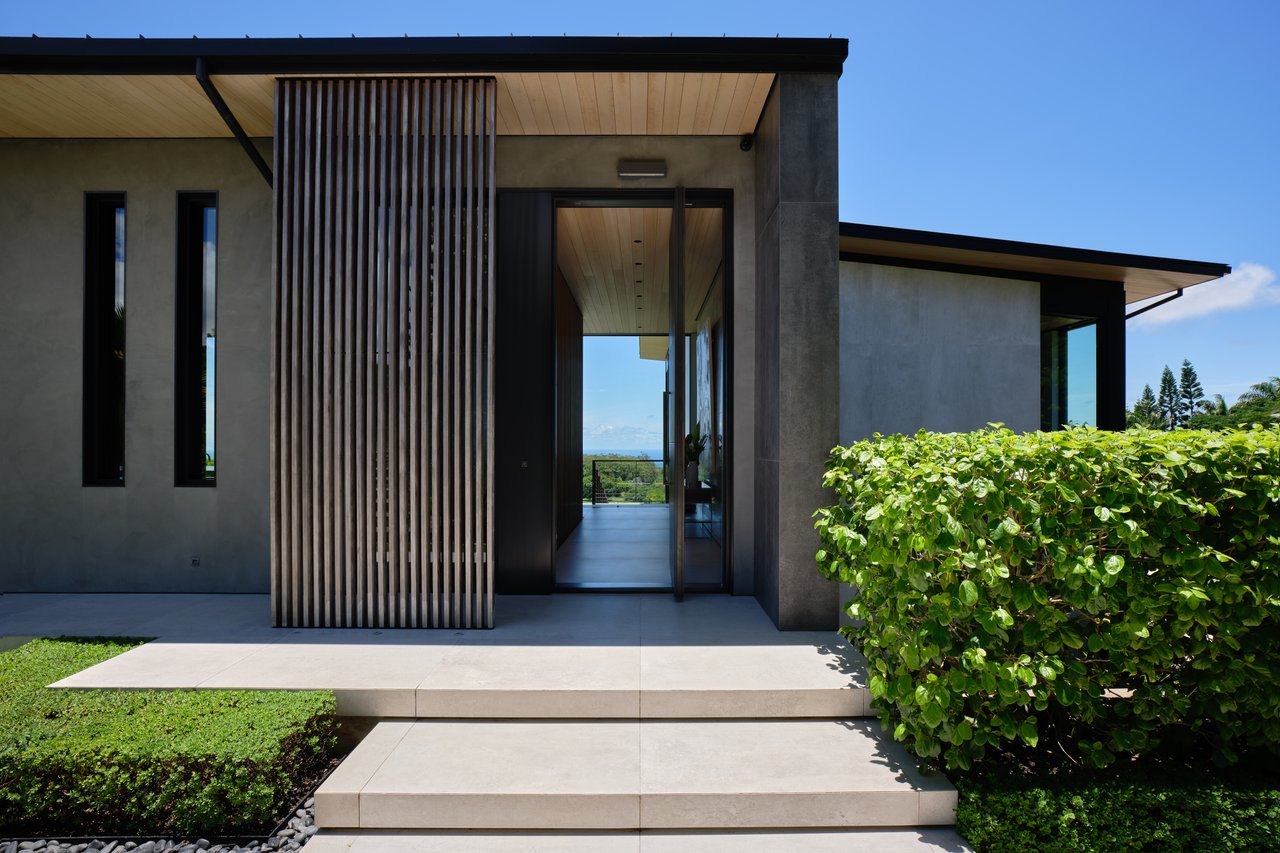
Architecture
July 30, 2026
Haʻikū luxury home for sale
July 21, 2026
Nuka Haiku Restaurant
July 18, 2026
Buying a home in Upcountry or rural Maui? Here's how Hawaii's 2050 cesspool law works, what conversion costs, and how to inspect before you buy.
Mino empowers buyers and sellers to make impactful, meaningful, informed decisions that enrich their lives for the better. Approaches each client with integrity and a sense of honesty that’s born from working in a place she’s always called home.