1642 West Kuiaha: An Award-Winning SEE Architecture Estate on 18+ Acres in Haʻikū
Architecture Mino McLean July 30, 2026
Architecture Mino McLean July 30, 2026
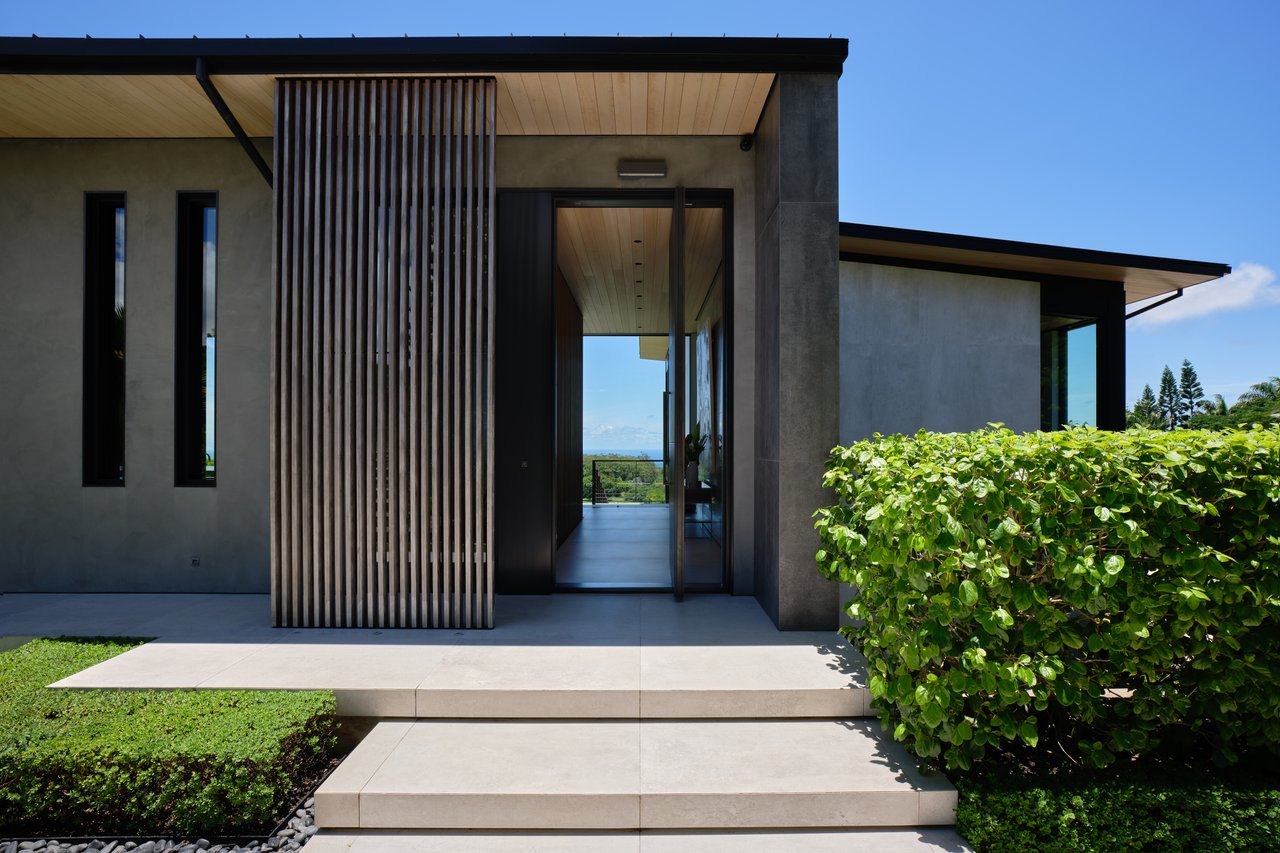
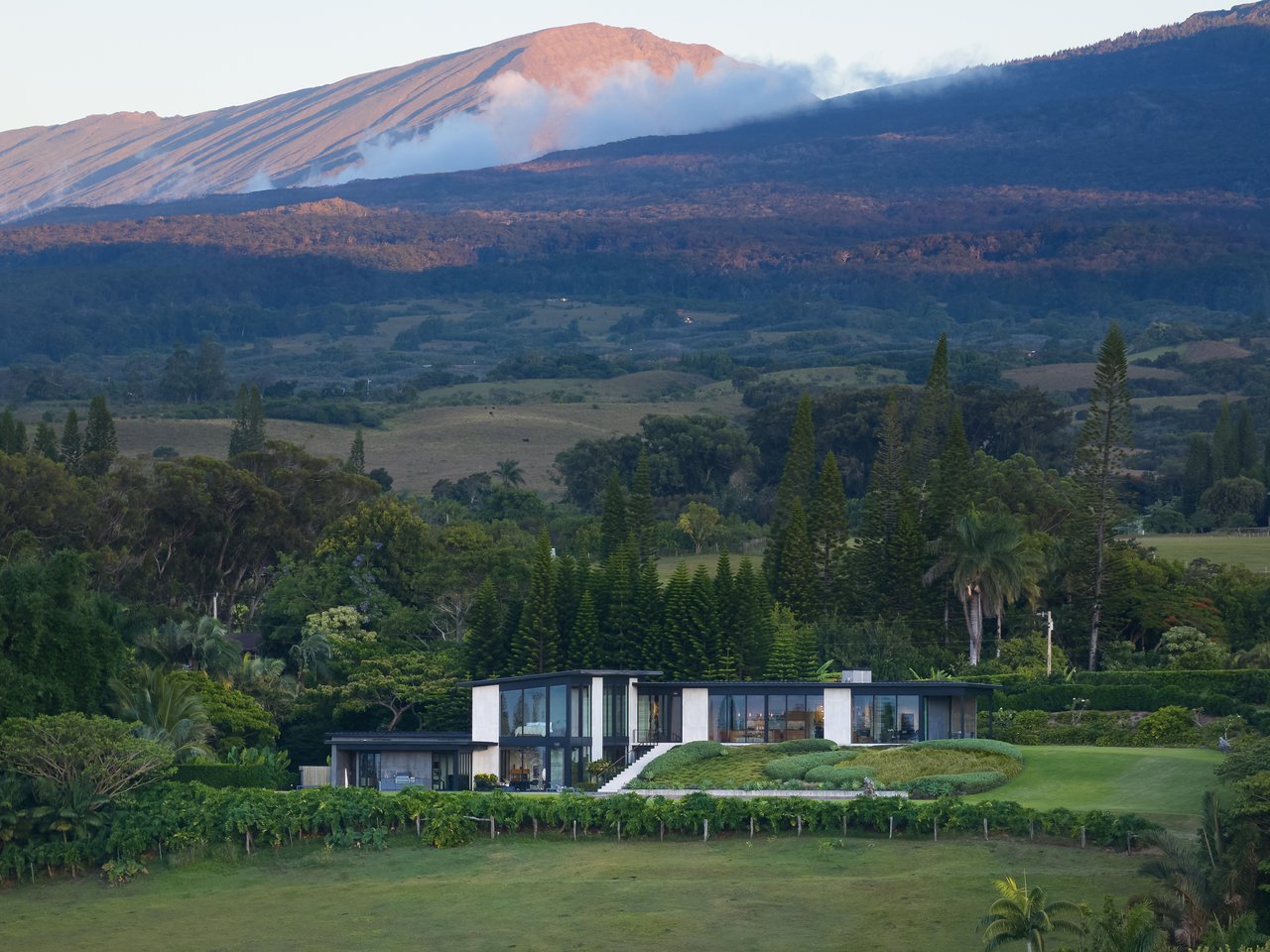
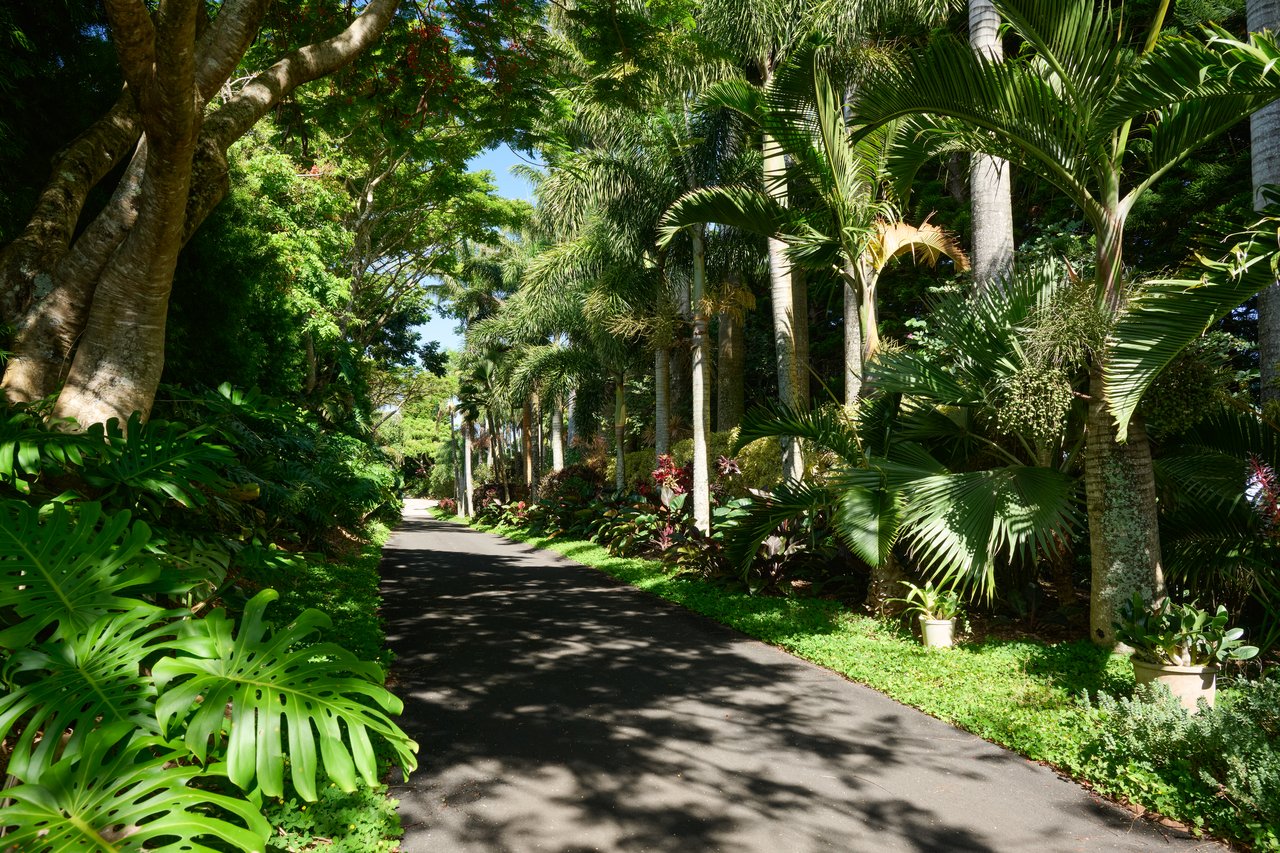
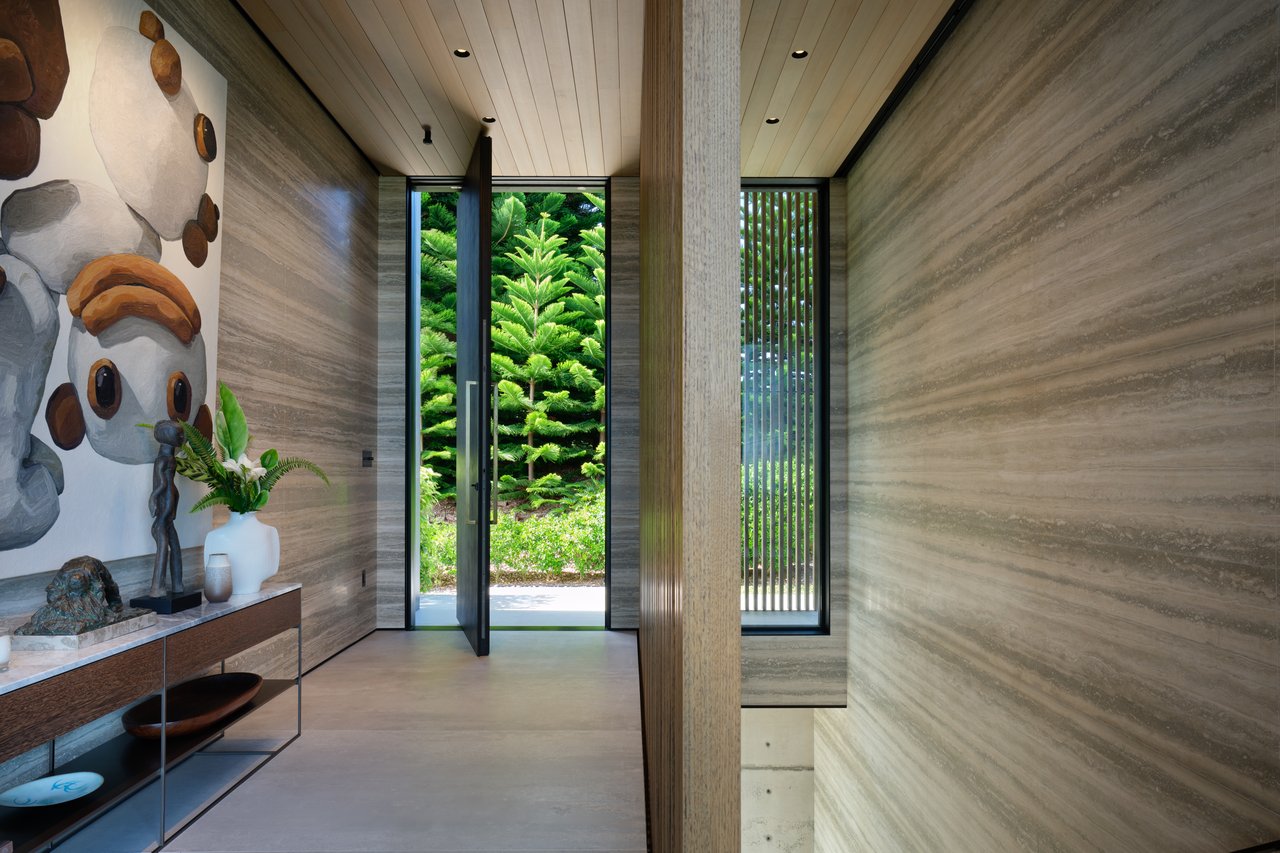
The drive in tells you nothing. A gate, a long private road lined with palms planted over the last twenty years, and a facade so quiet it almost dares you to keep looking. That restraint is deliberate. The architects at SEE Architecture designed this Haʻikū home to be discovered, not announced — the front elevation stays monolithic and unornamented until the moment the mahogany pivot door swings open and the room behind it gives way to a wall of glass, a fern-lined lightwell, and the Pacific beyond.
It's the kind of arrival sequence you'd expect from a museum, because that's exactly where the reference comes from. The approach nods to the Getty Center in Los Angeles. The interior lightwell borrows its logic from the de Young in San Francisco. The east facade carries a trace of the Guggenheim in Venice. None of it reads as homage when you're standing in it — it reads as a very deliberate kind of quiet, the same quiet that got this house into Dwell, Wallpaper*, Maui Magazine, CA Home+Design, and Pendulum, and onto BUILD Magazine's 2025 Maui cover.
The structure itself is a precision steel system built by BONE Structure — prefabricated off-site to eliminate the waste and variance of stick framing, which in practice means tighter tolerances, better insulation, and a house built to hold up against Haʻikū's moisture and rot pressure for decades rather than years.
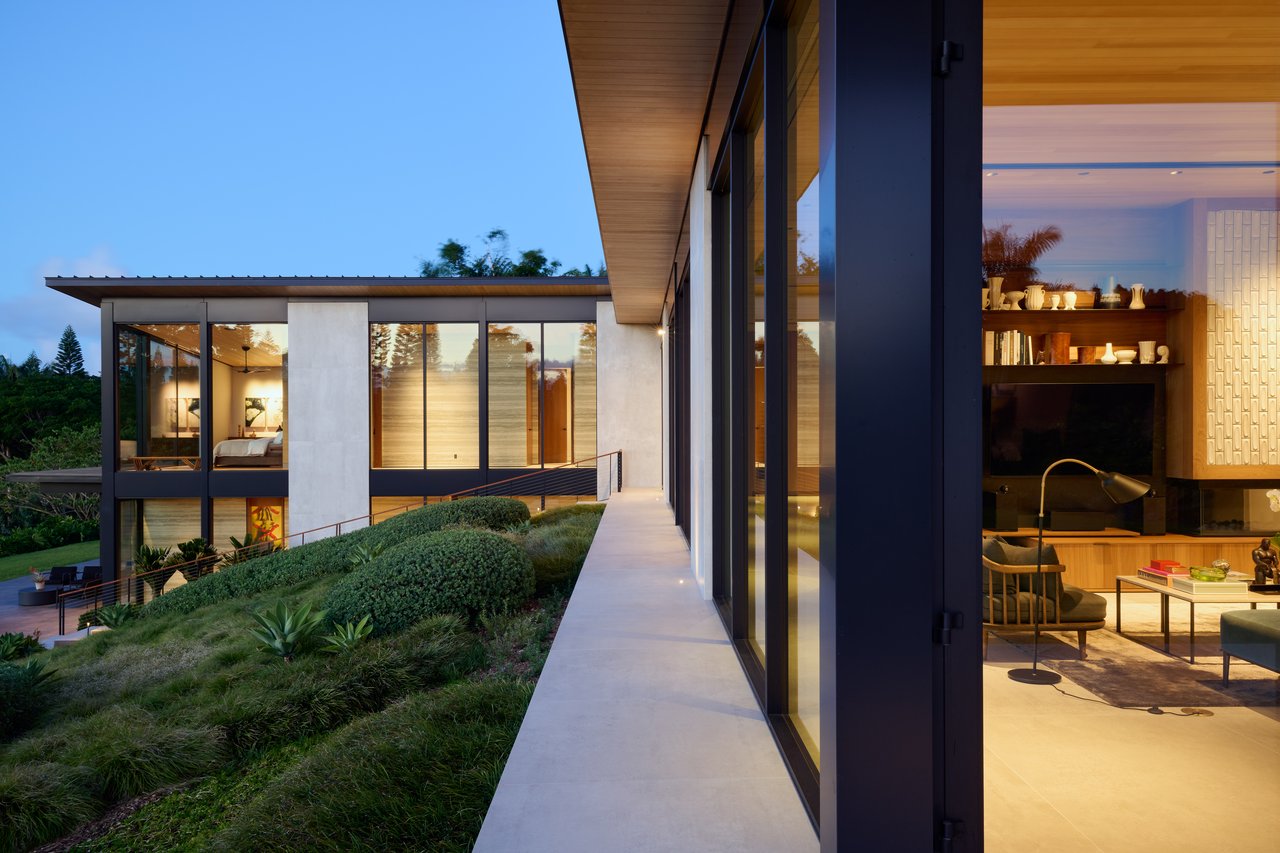
Inside that frame, the material choices do the talking. Vein-cut silver travertine — sourced from a quarry in Trevino, Italy after the original Turkish order was cancelled by pandemic shutdowns — was book-matched slab by numbered slab, with the grout color varied by hand to mimic the stone's natural striations. Henrybuilt, the Seattle-engineered system considered among the best in the country for kitchen and whole-house casework, built out the kitchen, every bathroom, the pool house, the laundry room, and the closets. Heath Ceramics — the Sausalito tile house that's been shaping mid-century design language since 1948 — supplied the handmade tile behind the living room fireplace and through the laundry and guest bath. Walnut stair treads and doors came from Pacific Millworks, made just down the road. Forbes & Lomax switches, made in the UK, and Waterworks fixtures throughout round out a materials list that reads more like a design monograph than a spec sheet.
The front door alone is worth pausing on: solid Honduran mahogany, clad in a hand-polished bronze surface by Axolotl, hung on a pivot hinge so precise that a door with that much weight opens with almost no effort at all.
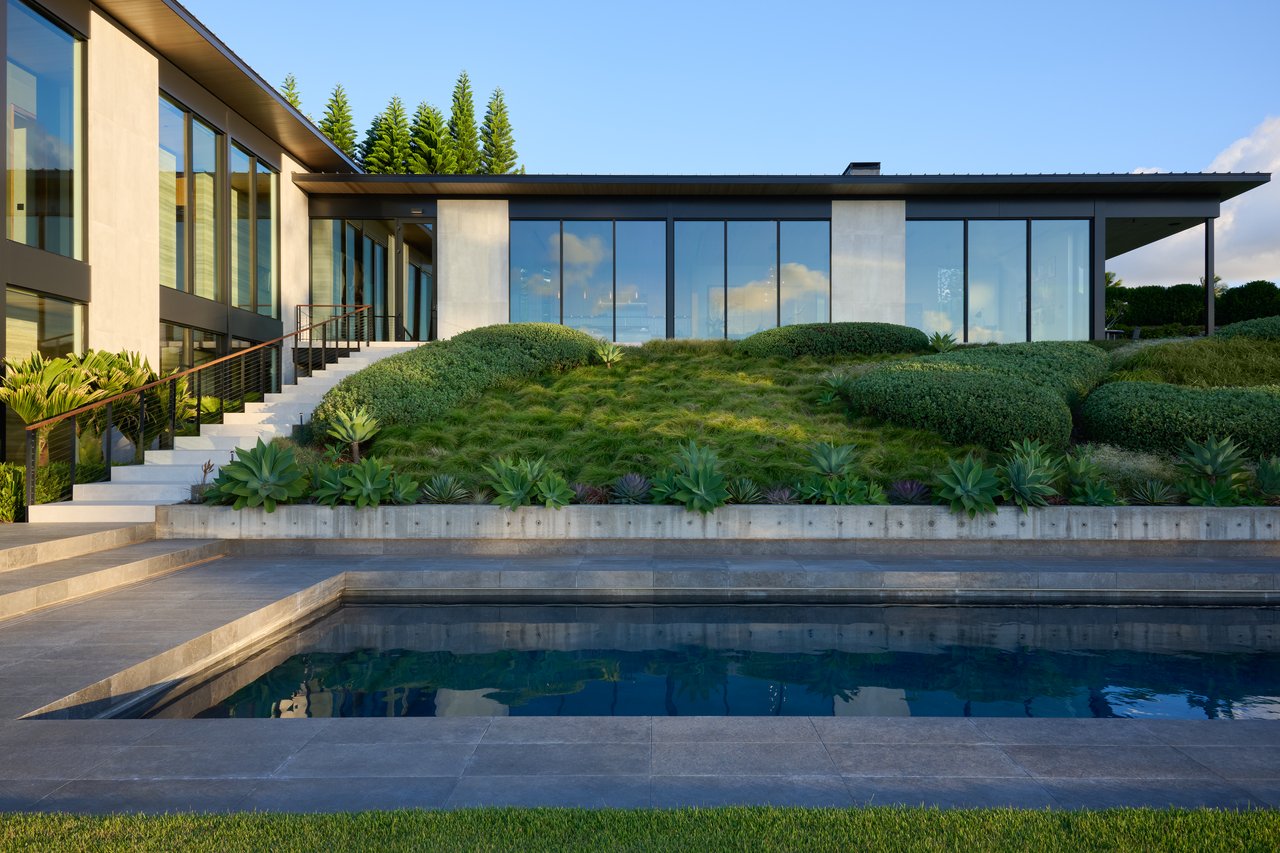
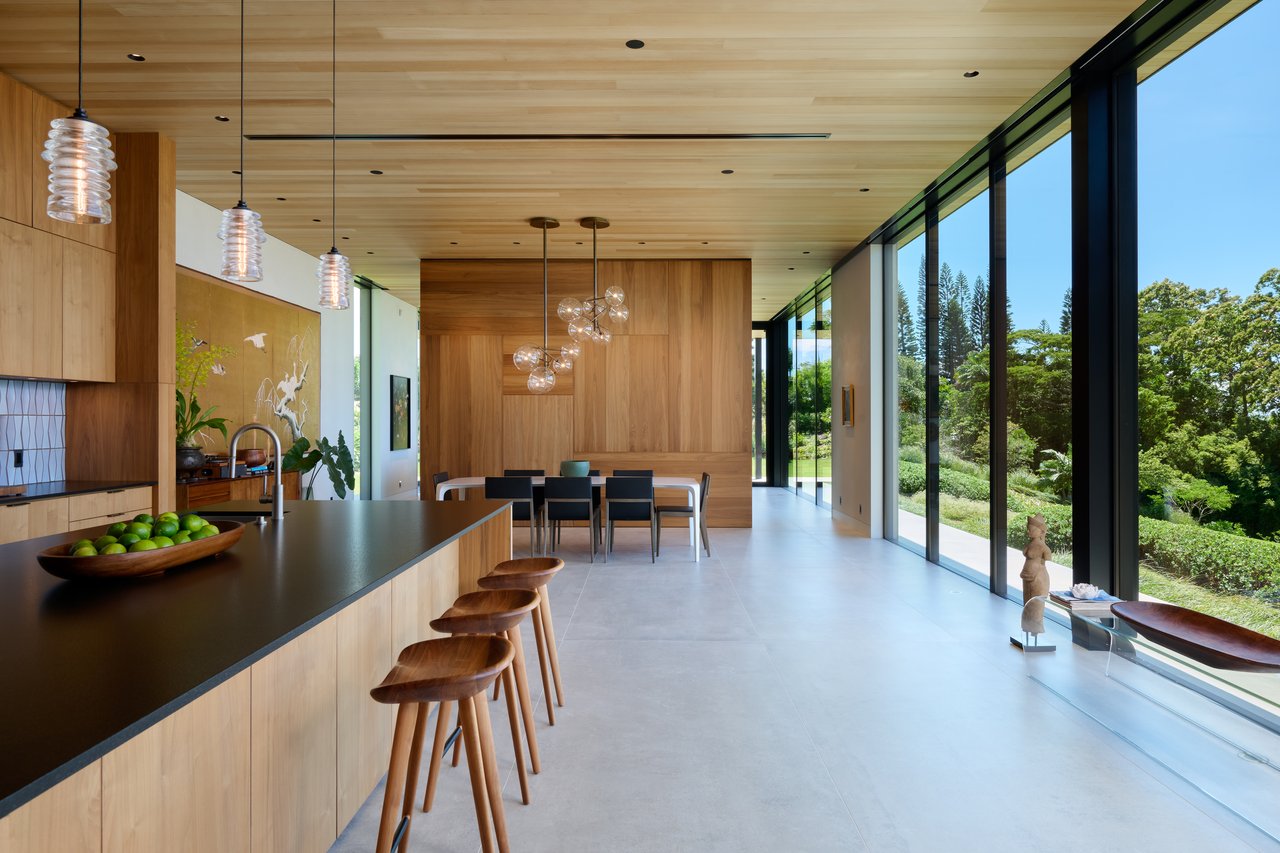
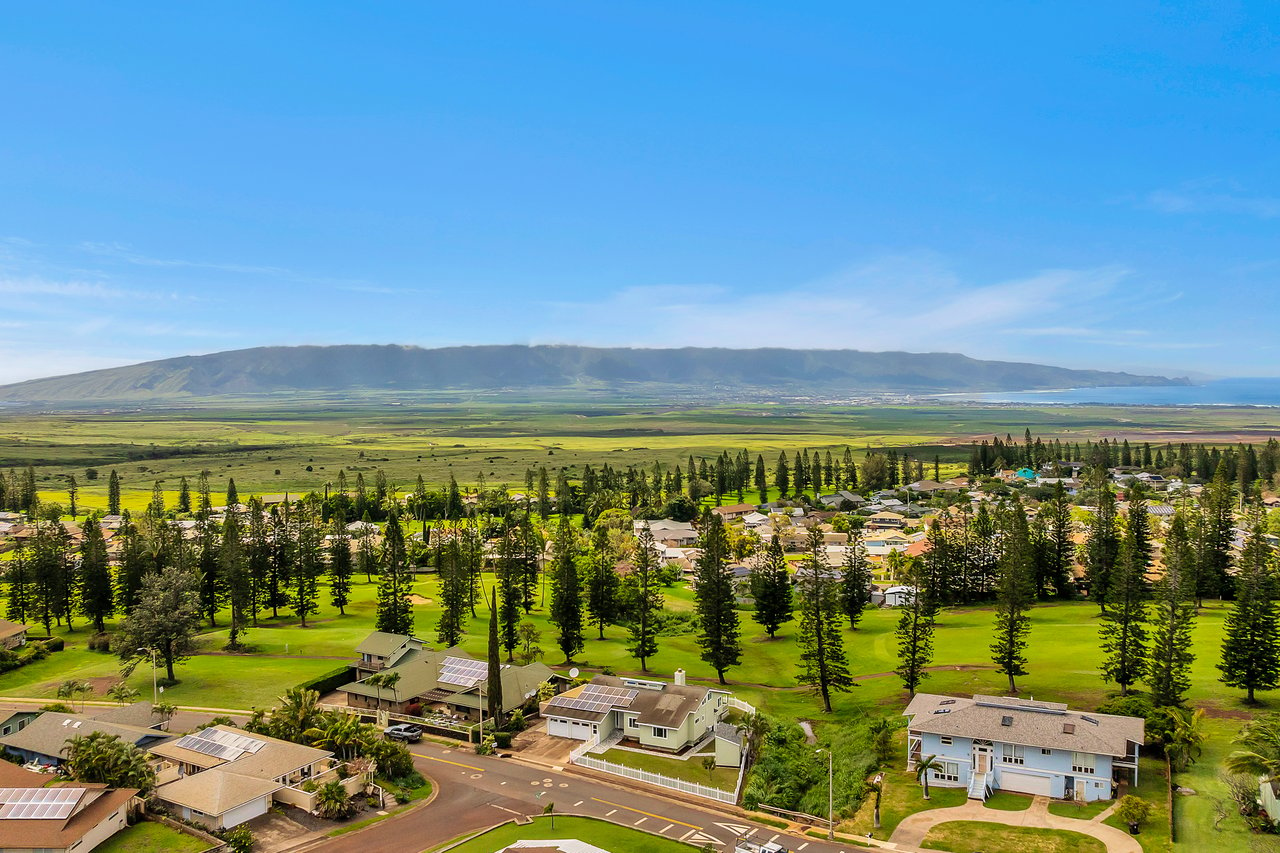
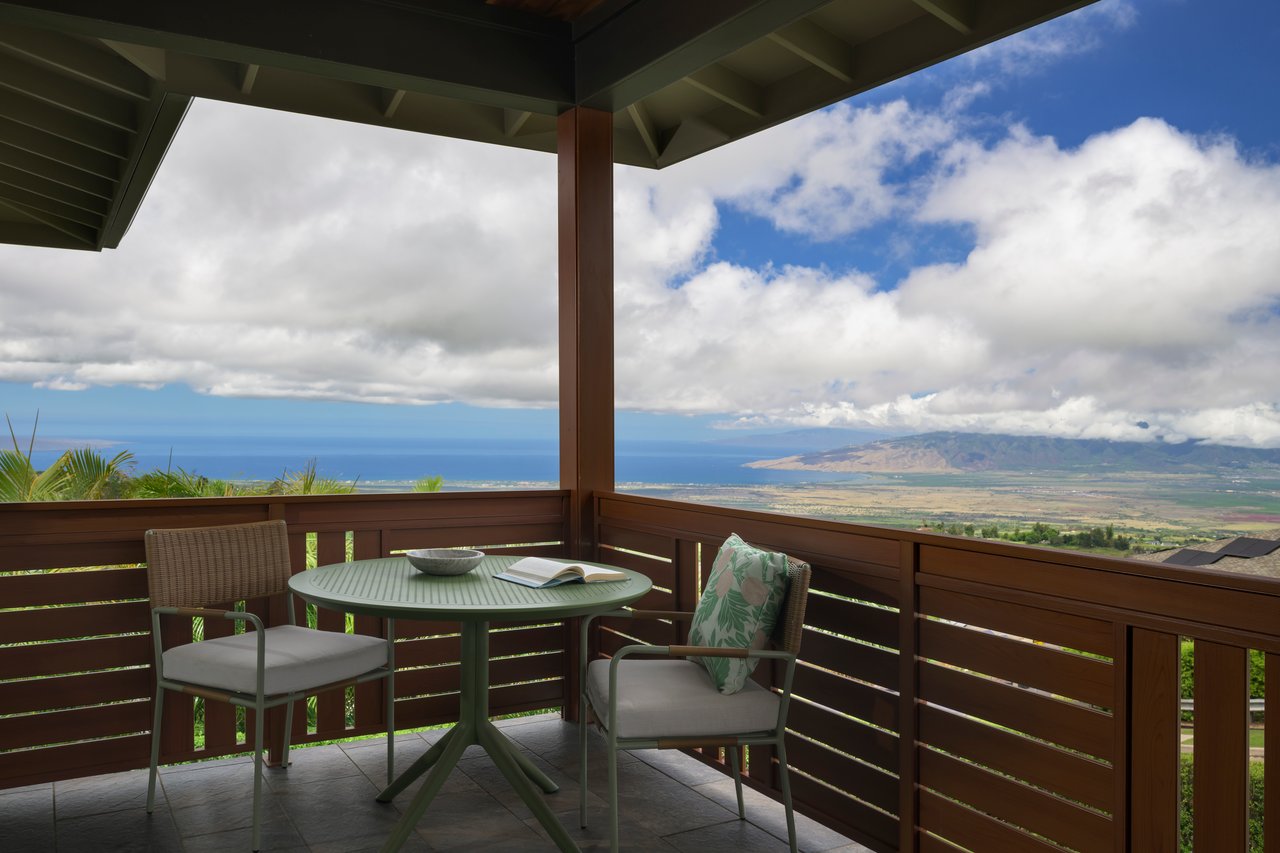
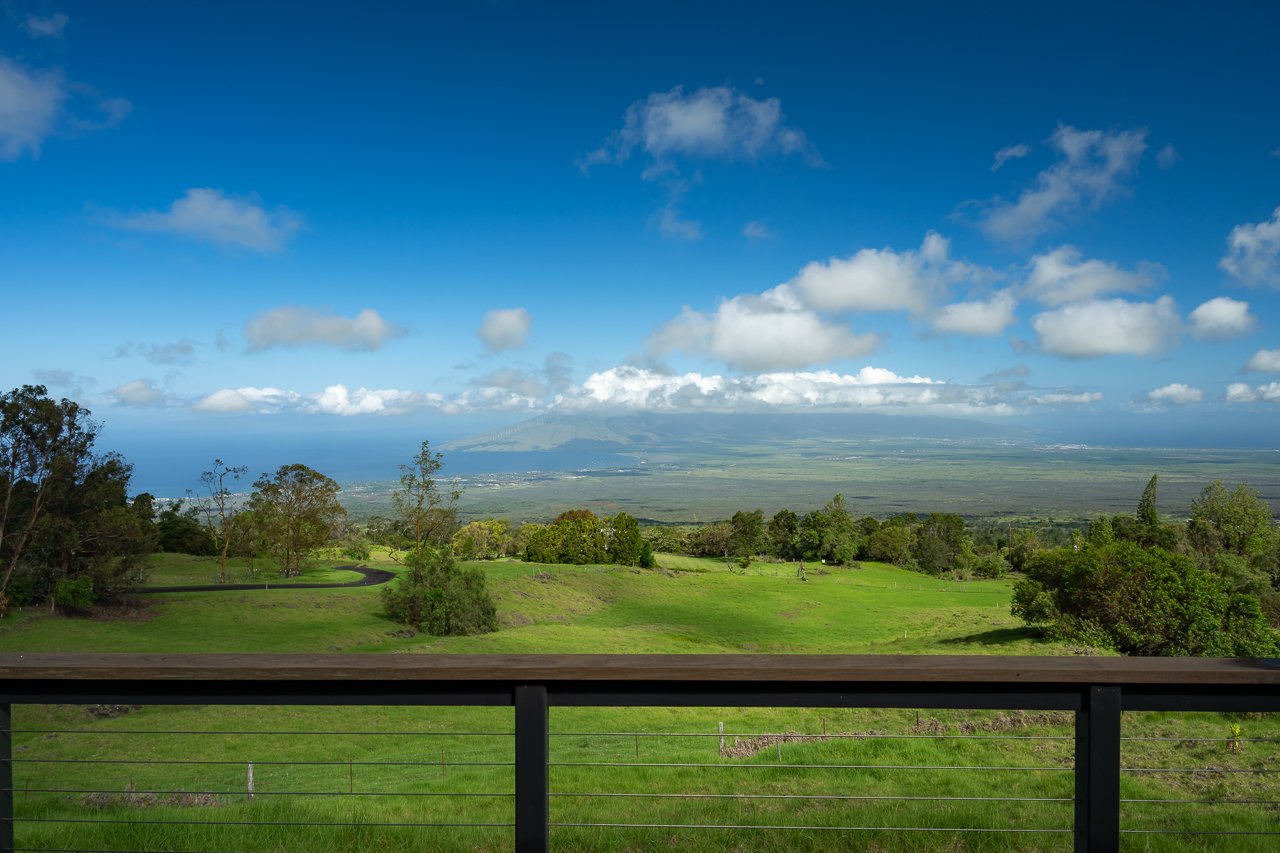
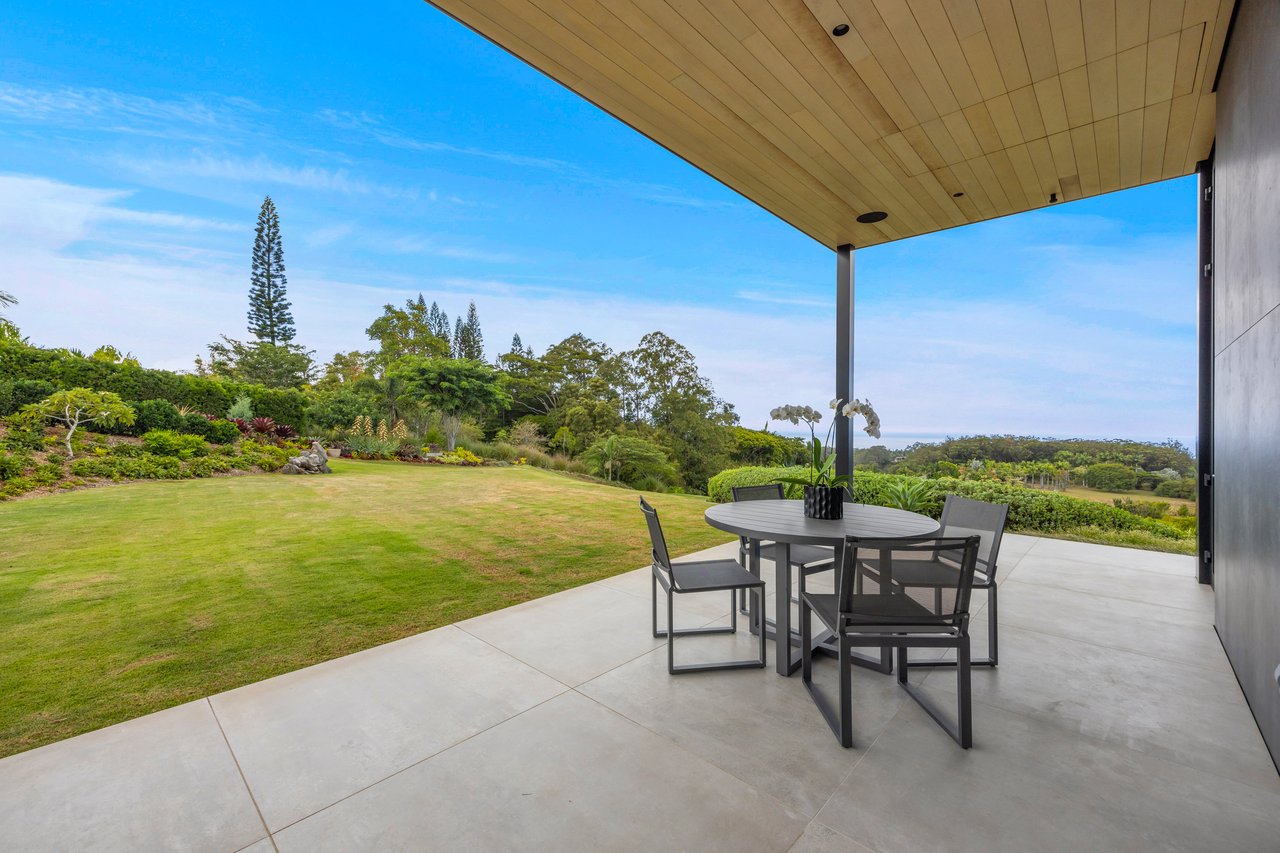
Every principal room is oriented toward the view — ocean to the horizon, Haleakalā rising behind, and in between, pasture where horses graze close enough to watch from the primary bedroom's window wall. The open kitchen, wrapped in wood cabinetry and lit by a cluster of hand-blown glass pendants, flows straight into a dining room backed by a full wood-paneled wall and out to a great room anchored by a Heath tile fireplace surround. Western red cedar ceiling boards, custom-treated to a soft neutral tone, run the length of the house and tie every room back to the same warm register.
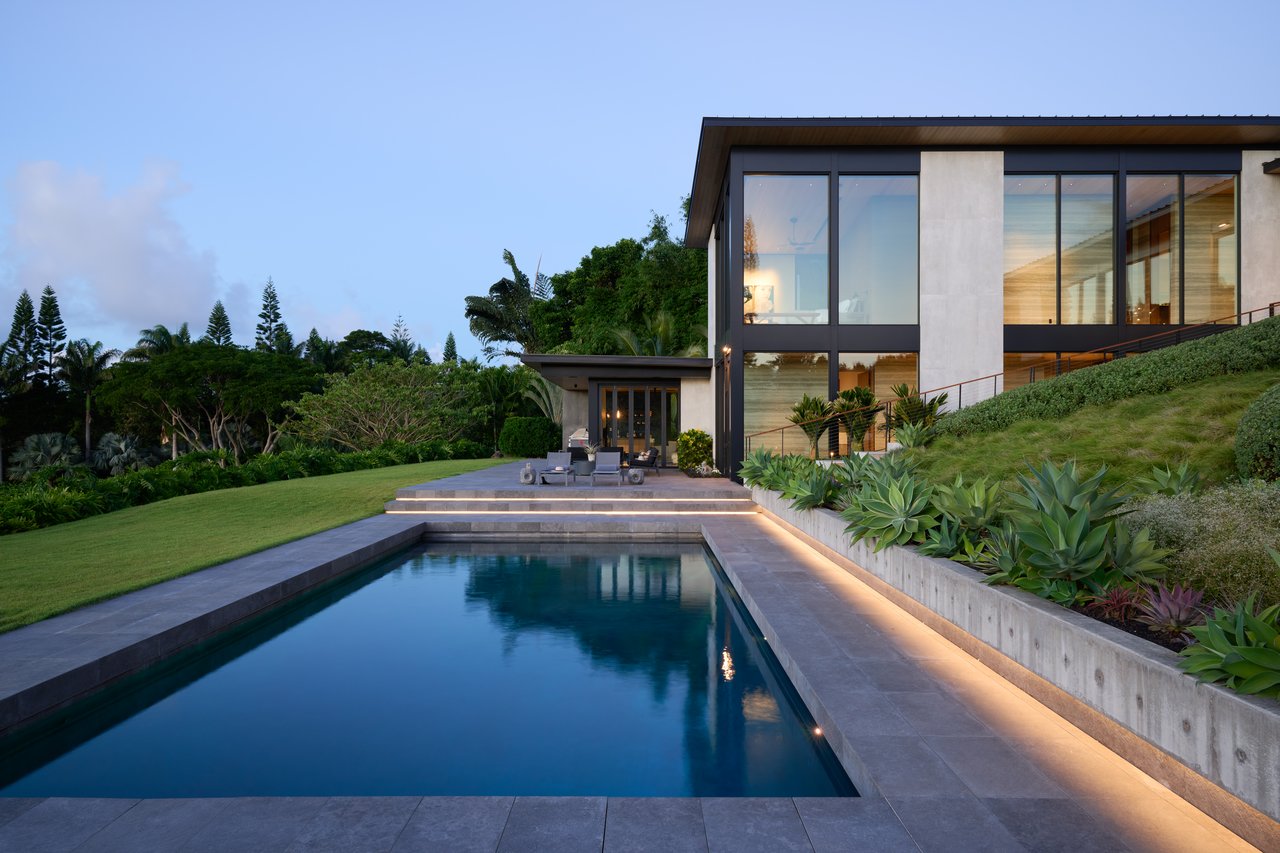
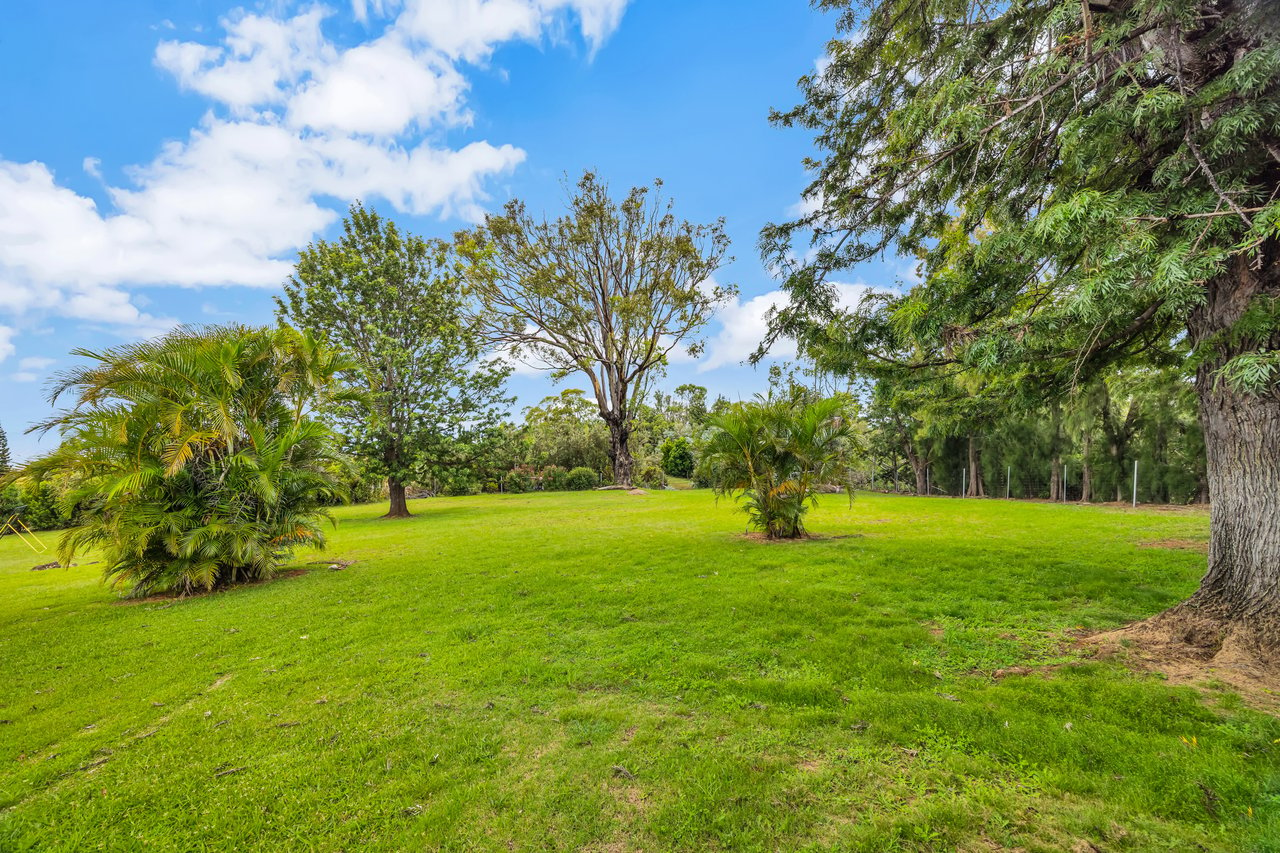
Outside, the design keeps going. Two Chinese scholar's rocks — Gongshi, sourced through Brown-Kobayashi Antiquities and traditionally used to draw the eye toward contemplation in a garden — anchor the landscaping. A sleek, basalt-edged pool sits off the main lanai, and beyond the manicured lawn, the property opens into more than 18 acres of rolling pasture, mature tropical plantings, and several acres of established orchard — citrus, avocado, mango, banana, starfruit — the kind of abundance that only comes from two decades of deliberate stewardship, not a landscaper's punch list.
This isn't a house on a view lot. It's 18-plus usable acres with genuine equestrian bones — gently rolling, horse-ready terrain with space for paddocks, an arena, or trails, and sweeping sightlines from mauka to makai the whole way across it. A separate two-bedroom, one-bath guest cottage — vaulted ceilings, slate floors, a full kitchen with granite counters, wraparound covered lanais — sits at enough distance from the main house to feel like its own world, ideal for extended family, guests, or a caretaker. Near a stand of private eucalyptus forest, a solidly built 1,152-square-foot barn with an additional 288 square feet of covered exterior space has spent the last two decades doing quiet duty as dry storage — its clean lines and deep overhangs matching the property's aesthetic closely enough that a creative studio, workshop, or equestrian conversion feels like the obvious next chapter rather than a stretch.
I see a lot of beautifully finished homes on this side of the island. What's rare is a house with an actual architectural point of view — one where the museum references aren't marketing language but genuinely traceable in how the spaces move you through them, and where the materials list holds up to the kind of scrutiny a design-literate buyer will bring. This is a property for someone who wants land with real agricultural and equestrian substance and a piece of documented architecture — not a compromise between the two.
If you'd like to see it in person, reach out — this is a property that takes some time to walk properly, so it's worth planning the visit rather than squeezing it into a quick showing.
Stay up to date on the latest real estate trends.

October 7, 2026
October 1, 2026

September 10, 2026
August 28, 2026
Agricultural land
August 20, 2026
What agricultural zoning actually permits on Maui's ag-zoned parcels, from farm dwellings to septic capacity.
Right Sizing
August 14, 2026
Architecture
July 30, 2026
Haʻikū luxury home for sale
July 21, 2026
Nuka Haiku Restaurant
July 18, 2026
Buying a home in Upcountry or rural Maui? Here's how Hawaii's 2050 cesspool law works, what conversion costs, and how to inspect before you buy.
Mino empowers buyers and sellers to make impactful, meaningful, informed decisions that enrich their lives for the better. Approaches each client with integrity and a sense of honesty that’s born from working in a place she’s always called home.